
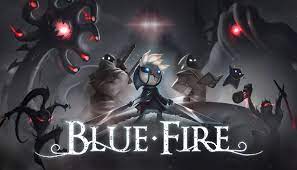
Robi Studios’ debut title, “Blue Fire,” is quite an interesting game. Releasing in 2021, the indie title aims to primarily utilize exploration and movement to create its unique entertainment factor. In that respect, it seems to have succeeded, as Blue Fire has garnered acclaim from both casual players and critics since its release. A gameplay focus on exploration and movement is certainly not unheard of, so what has Blue Fire done to set itself apart from its contemporaries? The game doesn’t seem too special just looking at it, but the title is anything but a standard 3D platformer. Robi Studios demonstrates a mastery of the concept of player creativity through Blue Fire, and that mastery is precisely why the game is so great.
What Is Player Creativity?
Player Creativity is a concept referring to the player of a game using aspects of that game in a novel manner for the purpose of achieving a goal. There are plenty of examples of player creativity in video games, sports, and beyond; the concept is universal to any game with an ounce of flexibility in its design. For instance, NBA Hall of Famer Dirk Nowitkzi’s invention of the one-legged fadeaway is a byproduct of player creativity. He simply used an aspect of the game (his body, in this case) in a way never seen before to score more efficiently, and doing so is a big reason for his success. That’s a prime example of player creativity and perfectly details how it can affect a player’s experience with a game. Player creativity can be instrumental in a player’s success, allow them to play a game in a way the creators never intended, heavily increase the competitive potential of a game, and so much more. It’s so varied in its impact, but the concept can add so much to a title, which is the exact reason so many game developers have tried to implement it into their games. Smash Bros., Elder Scrolls, and Fire Emblem are all video game franchises that have somehow implemented player creativity into themselves, and that’s just scratching the surface of how many titles utilize it. Player creativity is truly a ubiquitous tool used in the gaming industry, and Blue Fire is a shining example of how valuable the concept can be.
Communication Leads To Player Creativity
In a game of any form, there will always be a line of communication between the player and the game. Whether through spoken words, written words, or implications, all games communicate with their players. Through doing so, the player can understand what they’re supposed to do, how they’re supposed to do it, where they should be going, etc. There are many examples of video games communicating with their audience, such as tutorials or highlighting things with colorization, and these techniques typically succeed at getting players to understand what the game wants them to. Because of that consistent success, many titles use techniques like those for communication, but Blue Fire opts for a different approach. It actually uses something we’ll call an information void to communicate with players, and through that seemingly contradictory strategy, it’s able to use communication to guarantee the occurrence of player creativity.
Defining an Information Void
An information void is a method of game-to-player communication where the game gives the player insufficient information, which causes them to have a lack of understanding regarding their goal, destination, or other vital things to know. Plenty of classic games like Minecraft and the Dark Souls franchise utilize this technique to encourage exploration and experimentation in gameplay, as well as to create immersion. Using an information void typically means the developers have to be able to guide players in the right direction through unspoken things like level design or visuals; otherwise, they risk immersion-breaking confusion for the player.
How Blue Fire Uses Information Voids
“People who perceive the world with a fresh perspective, have insightful ideas and make important personal discoveries. These individuals make creative discoveries that are generally known only to them.”
– Understanding the Psychology of Creativity, Kendra Cherry
That’s a little bit of the psychology behind creativity, and Blue Fire crafts its unique information void specifically to take advantage of that psychology, thus causing player creativity to occur because of it. The title does that by creating a void of information concerning the places the player is supposed to go and what the player is supposed to do, two vital things to know if the player wants to so much as progress in the game. Robi Studios seldom tells players both their objective and where to find that objective in their debut title; they usually only know one of those things. This means they have to look at the game’s world with a fresh perspective just to progress, but they are never left with so little information that an online guide or the like would have to be relied on. That unique form of information void constantly has the player thinking of new ideas to figure out one of the two vital pieces of information they lack, and a lot of Blue Fire’s gameplay loop is just players executing those ideas until one of them works. With a lack of player knowledge leading to a fresh perspective on the world, almost no idea really feels too outlandish to be possible, thus leading to plenty of player creativity in gameplay. By taking advantage of some psychology, Robi Studios masterfully uses a unique information void that practically guarantees player creativity to occur and allows them to build Blue Fire around the concept.
Mechanic and Level Design
Mechanics and level design are the two nuclei of implementing player creativity into gameplay, as they almost entirely determine how players can be creative in a game. Blue Fire is no anomaly in that regard, as the title crafts both its mechanics and levels in a way that bakes player creativity into its moment-to-moment experience. In doing so, the game benefits from a slew of added gameplay components that make Blue Fire’s gameplay loop one of the best in the modern gaming industry.
Mechanics
Blue Fire’s mechanics are built to give players room to experiment and be creative, as they all have some trait about them that allows them to be used in multiple ways. The multifaceted nature of them allows the title’s gameplay to reap many of the benefits player creativity provides a game, such as mastery being satisfying and players being immersed in the experience via critical thinking. For example, the Dash mechanic is something the player has access to from the very start of Blue Fire, and it’s an incredibly valuable tool in any situation. It has two basic functions: quickly moving the player in an input direction and stopping the player’s fall for a second if they’re airborne. This gives the Dash mechanic a vast array of viable uses in gameplay, such as being good for closing in on enemies or bosses, closing gaps so players can make it to certain platforms, and increasing the player’s airtime if they need to be in the air for a bit longer. Whether in combat or platforming, players are bound to have to think about the best way to use their Dash in any situation. This keeps them engrossed in the title because of the critical thinking they have to do to achieve their goals with the mechanic and makes gaining mastery of the mechanic satisfying because of the difficulty involved with choosing the best way to use it in a given situation. Both of those benefits stem from the options for player creativity Blue Fire’s Dash provides; this one feature of the game is so impactful to its success. The options for player creativity the player is given through the Dash aren’t unique to that one mechanic, though; almost every little mechanic in Blue Fire has some options in how it can be used. This only multiplies the positive effects of satisfying mastery and player engagement produced by the Dash, and makes everything from basic attacks to double jumping an outlet for the player’s creativity to shine. Learning and experimenting with the different options of use for Blue Fire’s mechanics is incredibly enjoyable and serves as a genius way to implement player creativity in gameplay.
Level Design
By designing levels in certain ways, a game can allow players to be creative in where they choose to go. Blue Fire is a prime example of this, as it designs every single one of its areas to provide players with multiple paths to get to their desired destination while giving every one of those paths a reason to be traveled. In doing so, its exploration feels free-flowing and allows for plenty of creativity when it comes to getting around. There are many examples of Blue Fire doing this, with areas such as the Abandoned Path and Temple Gardens all having plenty of spots containing chests or other rewards. These trick the player into changing trajectory, but with how the areas are built, they can often get back on course to the primary reason they’re there from those little spots. Doing that requires some brief thought, and having to perform that brief thought all throughout the game makes Blue Fire incredibly engaging. This form of level design, based on little places that still lead to the bigger goal players aim to reach in specific areas, also allows the player to be very creative in their traversal. If anywhere can get them anywhere, they’re likely to take those little detours, no matter how obscure they may be, which benefits general exploration as well as helping to implement player creativity into gameplay.
Conclusion
Blue Fire is a title that masterfully utilizes player creativity to make its gameplay great. Robi Studios designed the game to communicate with players through information voids that necessitate player creativity simply for progress, and built their mechanics and levels to allow for players to really be creative in how they play. Player creativity is heavily encouraged and facilitated by mechanics that allow for it, as well as areas that don’t punish it in any way. This gem of an indie game is an example to the entire industry of how far player creativity can take a title. Blue Fire is a marvelous game and an amazing proof of concept for designing games around player creativity.
 Entertainment Analytical