

*Article Contains Some Spoilers For The Many Deaths of Laila Starr*
Theme is a fundamental aspect of storytelling, but it’s anything but easy to incorporate into every facet of a narrative. The effects of doing so are undoubtedly positive, but there are few works that actually pull off the feat. However, author Ram V and illustrator Filipe Andrade were able to do just that with their comic, The Many Deaths of Laila Starr. The graphic novel is thematically rich, brimming with depth, and has strikingly presented points that all tie back to the concepts of aging and mortality. Looking into how the creators weave those themes into the fiber of the comic highlights some of the proper methods to incorporate themes into a work.
What is Theme?
Theme is “an idea that recurs in or pervades a work of art or literature,” according to Oxford Languages, and the majority of stories in existence contain one. More than that, plenty of stories thrive off of their relevant themes, such as Superman stories or the film Interstellar. They make works meaningful and impactful to consumers, allowing them to become memorable and making them more engaging. Generally, the more presence any given theme has in a narrative, the better that narrative is, but creating that presence isn’t so black and white. Themes have to be presented organically and creatively in order for stories to keep their entertainment factor; their inclusion shouldn’t be a lowlight. While it may sound easy, crafting a story with a present theme that contributes to consumer enjoyment is quite difficult, but there are creators who have overcome that difficulty, and their works are better for it.
Character Designs
For The Many Deaths of Laila Starr, themes are first presented through character designs, using faces and bodies to sow the seeds of deeper messages into the story. These thematic seeds sprout with every narrative development, wordlessly elaborating on certain elements of mortality, aging, or both. Simultaneously, the gorgeous artwork of the comic’s character designs draws readers into the work, entertaining them in the same way an art museum entertains its visitors.

The character of Darius goes through more visual changes than any character in the story, as readers see him grow from newborn to elder. With his many different appearances, Ram V and Filipe Andrade make notable points about the comic’s two themes, all while giving him designs that engage readers visually.
Starting with Darius in his infancy, his awkward sleeping face is the most that is shown of him in his first hours, yet it still explains to the readers what it is to be a baby and how that relates to mortality. Just looking at a newborn Darius, the visual makes it clear how innocent and simple babies are. They are not yet familiar with the world, nor have they been negatively impacted by its issues, so their appearance is pure and uncomplicated. Darius’ appearance as an infant reflects those qualities and further displays the lack of presence mortality has within newborns. A new life has no concept of death after all and thus lacks much stress. Choosing to have him sleep makes that fact apparent while also making the design very realistic. Speaking of, the realism of Darius’ skin tone (more on color in our article on the topic) and facial expression is artistically genius, easily immersing readers into the panel as if it were a grand painting. The prominent facial features are particularly effective, as their almost goofy look entertains consumers.

In comparison to his design as an infant, Darius’ teenage design is evidently more complex. His facial expressions are even more pronounced, his short hair is more kempt, and his eyes are incredibly expressive. Looking at him, it’s clear that, with age, Darius is now concerned with the ways of the world. This can be seen in both his hairstyle and the smooth coloration of his skin, hinting at proper self-care and an interest in being seen as attractive. However, this is contrasted with the few lines on his skin being reminiscent of eye bags and his large eyes always looking somewhat distant or sad. In regards to mortality, this is a visual example of the impact its presence has on people as they age, causing them stress due to its cruel inevitability and unrivaled ability to cause pain. Darius’ teenage design elaborates on a single idea: With age comes a greater understanding of mortality, and that understanding is a constant source of stress for everyone. This sentiment rings especially true for Darius in his teenage years, as death has already personally taken treasured people from him. Because of that, he seems to have garnered some resolve to take his life seriously, not wanting to waste it, as can be seen in his prim and proper appearance. From an entertainment perspective, his nuanced look is fascinating, engrossing readers with its complexity while still effectively expanding on the narrative’s themes.
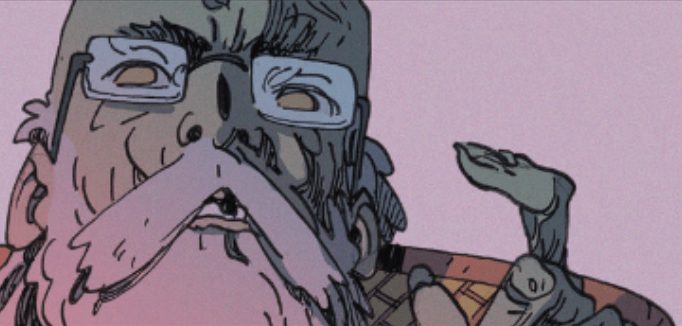
Lastly, Darius’ character design in his elderly years is the most visually nuanced of all his appearances. His wrinkles, glasses, beard, and missing tooth add a lot of depth to his design, but more importantly, they portray age authentically. Since readers have seen the man when he was youthful, seeing his body degrade so much in his older years is almost jarring. This decrepit look is very intentional on the part of illustrator Filipe Andrade, as it clearly shows how aging is a universal part of life, regardless of how energetic and young someone once was. As Darius comes face-to-face with his own mortality, readers are also forced to contemplate their own and consider what it really means to live a good life. The heavy detail in elderly Darius’ design doesn’t falter in its entertainment factor either; the thick line work and prominent beard make for a memorable and stunning visual.
Character designs alone present the themes of aging and mortality extremely creatively in The Many Deaths of Laila Starr, seamlessly allowing interesting points about those topics to surface in an entertaining manner. Darius and his ever-changing look is just one example, but many other members of the cast have designs just as meaningful. The titular Laila Starr’s part-regal, part-trendy look hints at a possible excessive focus on fleeting things, something that becomes tragic when people are face-to-face with their mortality. The scuffed design of the temple sheds light on how loss often coincides with aging. Powerful visuals like those are tools for the comic’s creators, incorporating themes into every panel and helping to make the contemplative narrative thoroughly enjoyable to witness.
Locations
The Many Deaths of Laila Starr features a diverse array of locations, utilizing homes and hospitals alike to expand on its themes. These many places never fail to set the proper mood for a scenario, and these moods serve to further highlight aspects of the narrative’s themes. They are a pivotal piece in giving the graphic novel its contemplative nature, while their visual flare is another way to entertain and enthrall readers.
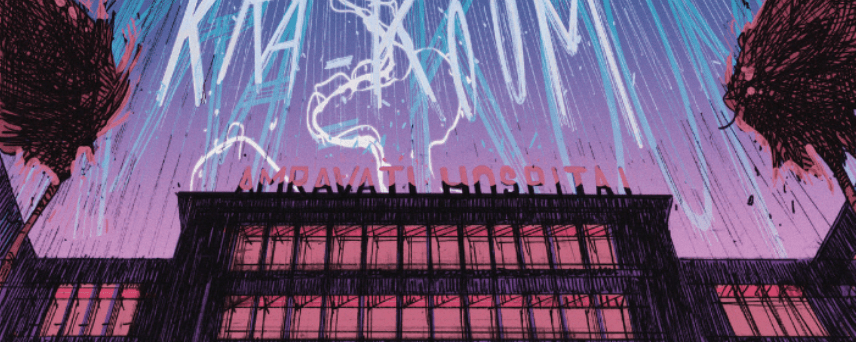
Hospitals are very atmospheric due to the many things associated with them, and the graphic novel takes full advantage of that fact, using the mood established by the location to spotlight chapter one’s focus on the suddenness of death. Since they are typically associated with a loss of life, setting part of the chapter in a hospital quickly creates a sense of looming tragedy, which is only strengthened by the events that take place within it. It may seem like a subtle detail, but the locale allows The Many Deaths of Laila Starr’s introductory chapter to be that much more thought-provoking. It clearly sets a tone, facilitates the exploration of mortality, and, not to mention, is a captivating sight. The blues, blacks, and oranges all give the hospital a sinister yet beautiful air in illustration, appealing to readers visually as a way to keep them invested so they can better take in the narrative and its themes.
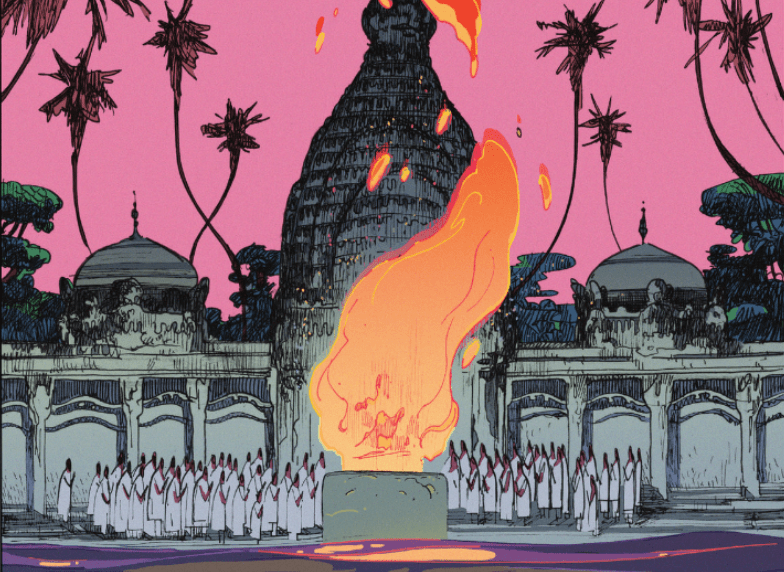
There’s a very stark dichotomy between funerals and beaches that the creators of the comic utilize to give chapter two its somber mood. Beaches are supposed to be natural wonders, places of joy and life, so placing a funeral in such a location just feels wrong. In a way, it’s a desecration of the place’s serenity, making the already tragic event even more so. Contrarily, though, the funeral itself is granted striking beauty due to the locale, showcasing a clear respect for the one being mourned. By setting the chapter (partially) in such a complex location, the reader’s emotions conflict, thinking the situation is equal parts a celebration of life and a painful, permanent goodbye. That weaves a distinctly somber mood into the scenes taking place there, accentuating how good people are often gone too quickly, which is a powerful message connected to both age and mortality. Visually, the setting is gorgeous—an eye-catching ceremony the reader will have difficulty looking away from. The brilliant flame, the lustrous water, the dimly lit sand—these are all marvelous illustrations that are sure to provide consumers with something to enjoy artistically.
Locations just like the hospital or the funeral on the beach are what give The Many Deaths of Laila Starr its palpable moods, heightening the clarity and emotional weight of narrative moments by using associated places. This approach to locale usage not only makes the exploration of themes stronger, but it also creates room for new thematic messages to be communicated silently. It doesn’t just elevate the presentation of themes; it wordlessly incorporates new angles into the exploration of them.
Dialogue
Of course, nothing can incorporate themes into stories better than the bread and butter of narrative writing: dialogue. Dialogue is key to communicating themes, messages, and the significance of events to readers, and author Ram V was certainly aware of that. The Many Deaths of Laila Starr contains character speech that is both powerful and telling, with thematic material incorporated into every word, allowing the graphic novel to tackle its subject matters with all the specificities they deserve.
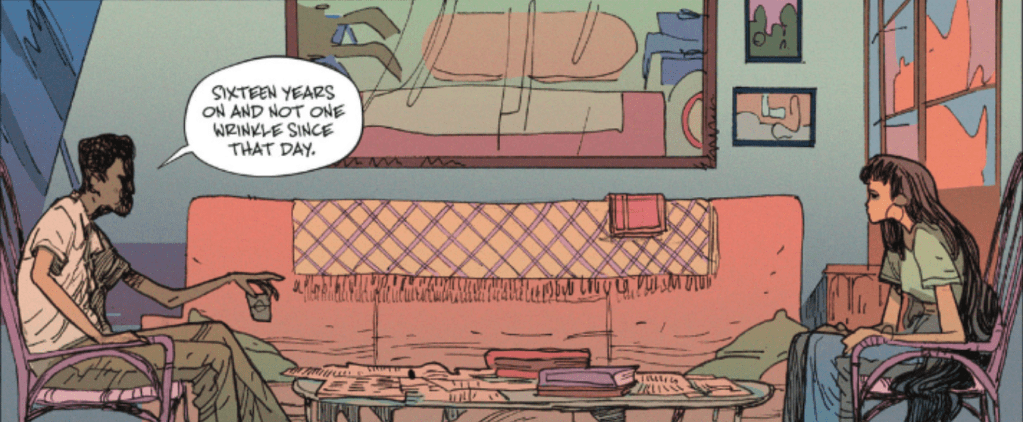
The confrontation between Darius and the titular Laila Starr in chapter four may be one of the best examples of incorporating themes into dialogue that exists in modern comics. The climactic moment encourages introspection on a conceptual level, as it portrays a man haunted by death face-to-face with the physical manifestation of it, naturally causing readers to consider how exactly they view their own mortality and the inevitability of their body’s degradation due to age. In execution, the story beat is just as interesting as the concept, with strong emotions of resentment, suspicion, and hatred teeming throughout. With context, Darius’ simple “Sixteen years on and not one wrinkle since that day” is granted a heap of emotional weight, a verbal representation of his suspicion regarding the true nature of Laila Starr. The subtext is the unsung hero in this moment narratively, just as it is in many of the comic’s conversations, building dialogue around related scenarios and topics to incorporate and expand on the themes. In doing that, The Many Deaths of Laila Starr creates some of the most thematically rich dialogue out there.
In sum, The Many Deaths of Laila Starr is an incredible graphic novel that displays some genius methods of incorporating themes into stories. Whether it be conveying its themes through character designs, select locations, or strong dialogue, everything the comic does to expand on the topics of aging and mortality is deeply thought-provoking and creative. This work illuminates the power of weaving themes into every part of a narrative, as in doing so, it is able to explore its subject matters with astonishing attention to detail. Ram V and Filipe Andrade are truly masters of their craft, and their way of incorporating themes into The Many Deaths of Laila Starr is proof of that. Moreover, it is something any storyteller can learn from.
 Entertainment Analytical