
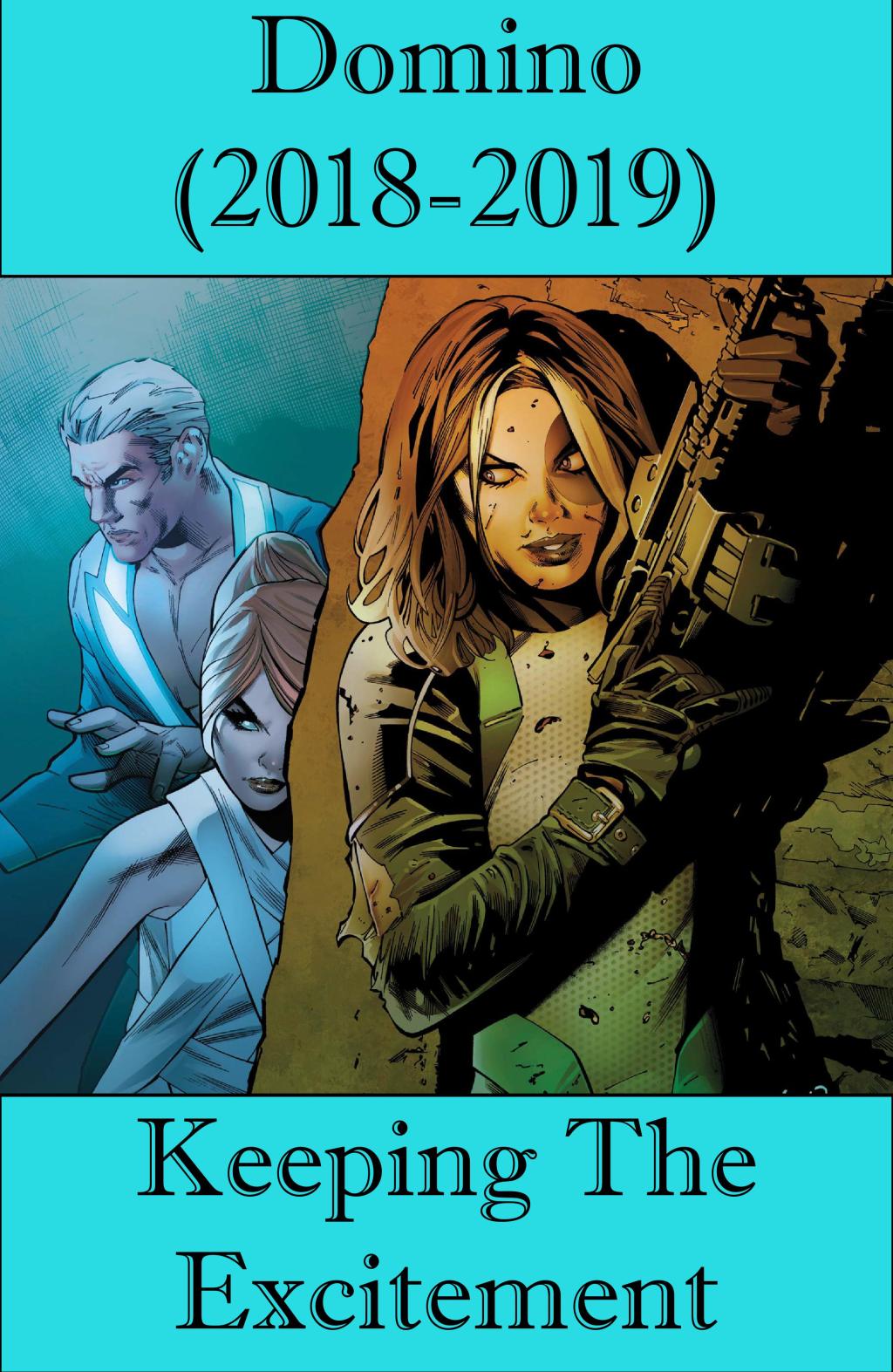
All genres of storytelling are built on emotion, the feelings of the audience being a tool writers, artists, and directors can use to appeal to them. Documentaries use intrigue, tragedies use sadness, comedies use amusement, and of course, anything action uses excitement. Through excitement, the genre is capable of engaging and entertaining viewers to the utmost degree, but that strength is a double-edged sword. Its importance leaves a sizeable vacuum in the narrative if it’s ever gone; an unexciting moment in an action story often loses much of what makes it fun to consume. This leaves creators in a difficult spot regarding that genre, as they must find ways to make everything from dialogue to character moments thrilling.
That is certainly a task, but it is far from impossible. Many talented people have been able to masterfully weave thrills into every bit of their work, with the many minds behind Marvel’s incredible 2018 comic series Domino being prime examples. Writer Gail Simone, cover artists Greg Land and Gang Hyuk Kim, as well as pencillers David Baldeon, Micheal Shelfer, and others, combined their skills in storytelling and artwork to create an action comic that thrives on keeping readers excited while seldom compromising story beats and character moments to do so. Looking into the techniques they used to make said graphic novel yields answers to a question constantly asked among those creating works in the action genre: how do you keep the excitement?

Excitement in The Action Genre
Fundamentally, works within the action genre utilize two major elements to electrify their audiences: visuals and choreography. These two pillars excite in different ways, combining to create a quickly revolving cycle of anticipation and payoff, which engages the audience with a slew of instantly gratifying moments.
Visuals
Whether something is live-action, animated, or drawn, visuals can serve as a great method to build hype and deliver instances of awe-inspiring spectacle. New things, such as new characters or locations, naturally excite people; that fact is built into human psychology. Emotion Typology brings this out on their page on excitement, where they explain, “Excitement is more likely when the anticipated experience is both novel or unique and desirable,” and concerning the aforementioned feeling, the freshness of a never-before-seen part of a work does a lot to draw out that vital emotion. Visuals are the other half of that metaphorical equation, as they are what make these new sights desirable or evocative. A great character design or beautiful special effects wow consumers with beauty or spook them with terror and can additionally create some thrilling suspense that boosts the quality of a narrative’s more dramatic portions.
Choreography

The choreography of a fistfight or firefight is a sandbox, rife with creative options that can form the most exhilarating segments of a work. A quick jab can create tension, a gunshot can insert raw emotion into a conflict, and a haymaker can illustrate a difference in strength or experience between combatants; even without words or heavily established characters, what is done in a battle tells a story in and of itself. People get absorbed in those self-contained tales, constantly asking the key question: “Who’s going to win?” Once the audience asks that question, a fight’s choreography has done its part to excite them, as it’s a biological extension of the excitement. Emotion Typology once again says as much in their excitement webpage, where they state the following: “The evolutionary function of excitement may be to promote exploratory behavior. It causes you to focus your attention on something good that will [happen] in the future, so you don’t miss the opportunity.” This is why a great battle can make you cheer in celebration or weep when a character is defeated.
Both visuals and choreography work wonders to electrify audiences on their own, but together, they grant works a way to deliver anticipation and payoff at breakneck speeds. This can be seen in a big combination of blows in movies like Creed, huge impact frames like the Black Flashes of Jujutsu Kaisen, and action-packed strings of panels seen in comics like The Sacrificers. Small movements or strikes build up to climactic displays of force or power, all of which are enhanced by visuals that focus on the right things and prove to the audience the effectiveness of attacks through special effects, waves of color, and more.
How to Make Exciting Dialogue and Narration
So, if visuals and choreography create most of the action genre’s exciting moments, how can one keep that excitement present in dialogue and narration? These things are often the building blocks of character and plot writing; it simply isn’t realistic for most narratives to go without them. However, that doesn’t mean that for works of the action genre, they exist as necessary evils. Dialogue and narration can be utilized in a plethora of ways that are just as exciting as battles and laser blasts; Domino demonstrates that, taking advantage of the graphic novel medium to make those two components of storytelling as exhilarating as possible.
Short-Form Dialogue

Throughout the comic series, Gail Simone employs short, quippy, and comedic dialogue heavily to prevent speech from getting in the way of action-packed segments. This allows the visuals, the most important part of any comic, to be displayed in all their glory, all while leaving a place for characterization to occur. More than that, these smaller lines enhance what the eyes see, combining with Domino’s gorgeous artwork to make memorable panels that contribute to the narrative. By avoiding walls of text, Simone facilitates high-quality visual storytelling that doubles as thoroughly entertaining content.
First-Person Narration
One of Domino’s defining traits is its first-person narrator; the graphic novel uses the thoughts of the titular protagonist, Domino, as narration for every one of its issues. The benefits of doing this are twofold: It gets readers into the protagonist’s head, thus helping to inform them of her personality and emotions, and it allows for her character to be expanded upon in action sequences without interrupting choreography. Both boons are very impactful, especially for an action comic, since it’s a genre in the medium where dialogue- or narration-heavy segments are typically seen as lowlights. This more personal narration style doesn’t feel like a chore to readers, though, and instead exists as a great way to develop the main character without taking away from a fight or thrilling moment.
Subversion
The previously mentioned elements of the comic’s dialogue and narration are present in most portions of the story, making them the norm once someone has flipped through a couple of pages. Gail Simone takes advantage of that fact by subverting the expectation, slotting longer, more expository segments of dialogue and narration into certain pivotal points of the narrative. Generally, doing this is simply unexciting and takes away from the quality of a work of action, but by making it abnormal, it becomes striking. As mentioned before, new things excite people, and by creating an expectation and delivering something entirely different, Simone can make necessary exposition feel new. As such, it will electrify them and keep them excited in even the quietest moments.
The most important thing to note when crafting thrilling dialogue and narration is that it doesn’t come down to minimizing their presence or making them constantly relate to something more exciting. In truth, to exhilarate the audience through speech, that speech needs to exist within the narrative in an interesting way. That could mean the words spoken are incredibly important to characters people care about (this is how excitement is created in the drama genre), or in the case of Domino, it could mean the words enhance action by being fun, easy to consume, non-obstructive, constantly informative, and at times palpably important to the story.
Inserting Narrative into Battles
There aren’t many things more difficult to do than insert a plot- or character-relevant narrative into a battle effectively. To do so, writers must give a battle meaning, a defined goal, and a sense of importance while letting the choreography and visuals shine. Many great action sequences only do one or two of those things, but ticking all three boxes takes the quality of one from great to unforgettable.
This article’s subject matter, Domino, is rife with fights that check all those boxes. Its secret to doing that is space and stakes. Using those two aspects of storytelling, it crafts an array of truly incredible battles.
Space

Physical space is step one of Domino’s action formula; the comic simply leaves a lot of room for visual spectacle and interesting attacks to occupy. This is due to its minimalistic placement of speech and narration bubbles, which can create an in-battle narrative through short words and thoughts. Character relationships and emotions can be understood through those small portions of text, forming the bulk of a fight’s story, but the character work’s lesser presence in any given panel prevents it from taking away from its choreography or visuals.
Stakes
Stakes are a key part of any narrative, including ones that are told through battle, and Domino masterfully creates stakes that give its fights tension and narrative impact. Gail Simone never fails to write clear consequences into combative encounters, and she makes these consequences harm the characters specifically, focusing on things like morality and connection as opposed to abstract ideas like the world ending. These more personal stakes heighten the tension of an action segment dramatically, engaging readers due to how impactful its result will be on the narrative.
Emphasizing these two elements in a battle isn’t just a good way to insert narratives into comic battles; the components Domino uses work in every medium, helping fights check those three boxes. Giving choreography space to thrive is what makes famous confrontations like Captain America: Civil War’s airport battle so incredible, as that room allows the actors free rein to portray the superpowered altercation as a true falling out for Earth’s mightiest defenders. Intimate, character-relevant stakes are similarly effective in storytelling, making altercations like Miles’ encounter with the Prowler in Spider-Man: Into The Spider-Verse emotional rollercoasters.
Keeping the excitement is a tall task for any action genre writer, but as can be seen through the masterful visuals, choreography, and writing of Domino, it isn’t an impossible one. By making dialogue and narration that support action sequences, have an extreme level of importance, or exist in some other interesting way, things like exposition or characterizing moments can be just as exhilarating as a punch or kick. By inserting non-obstructive narratives into fights, they can be taken to another level of quality, making them narratively impactful via stakes, simply entertaining due to attacks having space to breathe, and supremely exciting to watch. Careful story planning is key, as well as a keen knowledge of the best aspects of a medium, but any work of action can remain thrilling throughout its narrative. If they learn from the example of the creative minds behind Domino, any creator or group of creators can certainly keep the excitement.
 Entertainment Analytical