

With the advent of a new anime season, Mappa’s original isekai Zenshu has been a lesser-known release, a show many have brushed over. Its first three episodes, however, are anything but forgettable. Mappa’s incredible animation brilliantly brings it to life, and its clever use of common isekai tropes has stamped it as one of the ones to watch for Spring 2025.
What Are Common Tropes in Isekai
The isekai genre is one of anime’s most popular, defined by its core concept of one or more characters being transported to another world. Its common tropes include overpowered protagonists, romantic subplots, and fantastical or generally fictional monsters. How the genre typically uses these things is largely reminiscent of their usage in video games; those aspects of the isekai are inextricably tied to gaming.
Overpowered Protagonist
The most ubiquitous of isekai’s tropes, the overpowered protagonist is a simple concept. The main character of the narrative, for some reason or another, possesses some unique trait that makes them a more dangerous combatant than almost anyone else in the show as early as episode one.
While this trope is seen as oversaturated by the anime community, plenty of incredibly successful shows have made use of it. Overlord, Saga of Tanya the Evil, and Tensura; these series all feature overpowered protagonists effectively. The key is to make those powers visually interesting, and for the protagonist to be likable or evocative outside of their strength; their power itself should only be a tool to support stunning action segments. When this is done, an overabundance of strength can be incredibly fun to watch, but if the character writing cannot make up for the inherent lack of in-battle tension this trope creates, watchers will get bored quickly.
Romantic Subplot
While romantic subplots are a staple of fiction in general, they are almost synonymous with isekai. It’s rare to see a work of the genre lacking some sort of will-they-won’t-they, and this is due to their convenience from a writing standpoint. Romance is an easy excuse to introduce and characterize cast members, and it can also add natural sweet points to a show.
Romantic subplots do have an issue though. They can often get in the way of more exciting story beats, making viewers feel like they were thrown in to add in lighthearted moments. Timing is everything with this trope; placing romantic scenes in the right place is refreshing, but they are aggravating otherwise.
Fantasy Monsters
The classic fantasy monsters are one of the best writing tools in fiction, and the isekai genre takes full advantage of them. They can be used to convey strength, weakness, danger, and even morality in certain scenarios. Moreover, their visual features are often striking, a great way to engage the audience.
Despite their benefits, fantasy monsters are deceptively difficult to implement into stories. They typically don’t have personalities and simply exist to create a noticeable threat or imply something about members of the cast. Because of this, they can easily feel like filler if used in the wrong place. When they appear, they must feel relevant and necessary.
How Zenshu Uses Tropes Effectively
Zenshu’s staggering entertainment factor comes from its intentional, clever usage of its genre’s tropes. With an overpowered protagonist, a romantic subplot, and fantasy monsters; the anime has it all, but it puts its spin on things to avoid becoming another one in the crowd. It feels like an isekai, with the grandiose and free atmosphere characteristic of the genre, but its twist on tropes provides the audience with a uniquely unpredictable experience, making it a joy to watch.
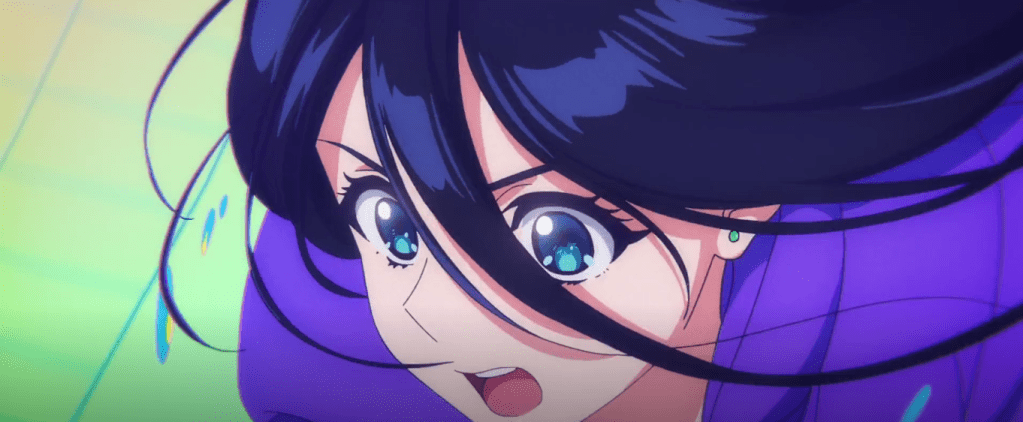
Starting with an overpowered protagonist, Zenshuu’s Natsuko Hirose checks the power box. Her ability to “draw new fates” is incredibly powerful, facilitating brilliantly animated action segments that are fresh to watchers and awe-inspiring visually. More than that, Natsuko herself is able to be quite entertaining in her own right due to her strong personality. Brash, aggressive, and rude at times, the inevitable clashes she has with the rest of the cast can be comedic or lead to some heartwarming moments. Her willingness to help others makes up for all those negative traits, ensuring she’s never bad enough to be unlikeable, while still affording her a place to develop from.
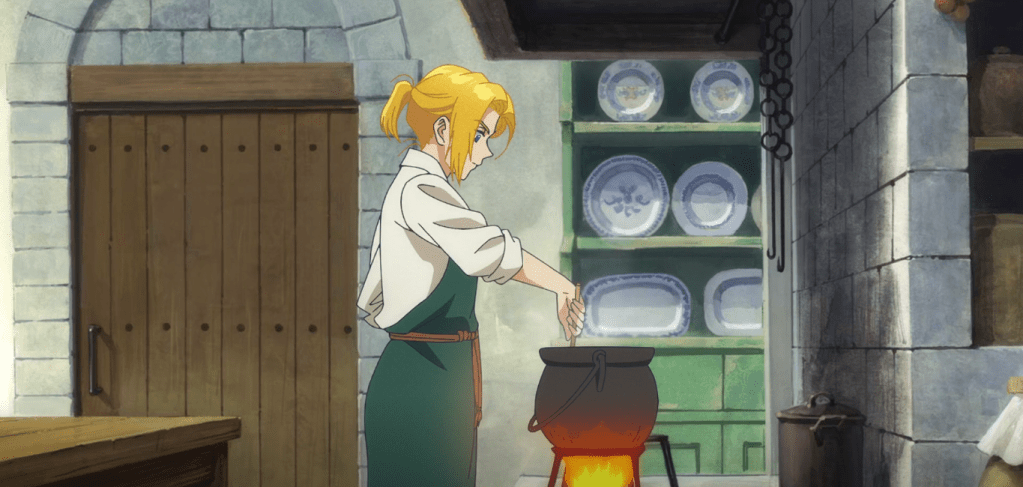
On the topic of Natsuko, her budding relationship with Luke Braveheart forms the romantic subplot of Zenshu. The anime generates interest in this subplot through uncertainty, as its smaller role in the narrative makes the two getting together feel like a possibility rather than a guarantee. The sparse moments we get between them also have an air of importance because of that scarcity, encouraging viewers to engage in those sections, which helps make their relationship easy to understand and follow. Lastly, the minimal role of the romantic subplot in Zenshu frees Natsuko and Luke from being bound within that part of the story, giving the creators room for the two to have individual interesting moments outside of each other.
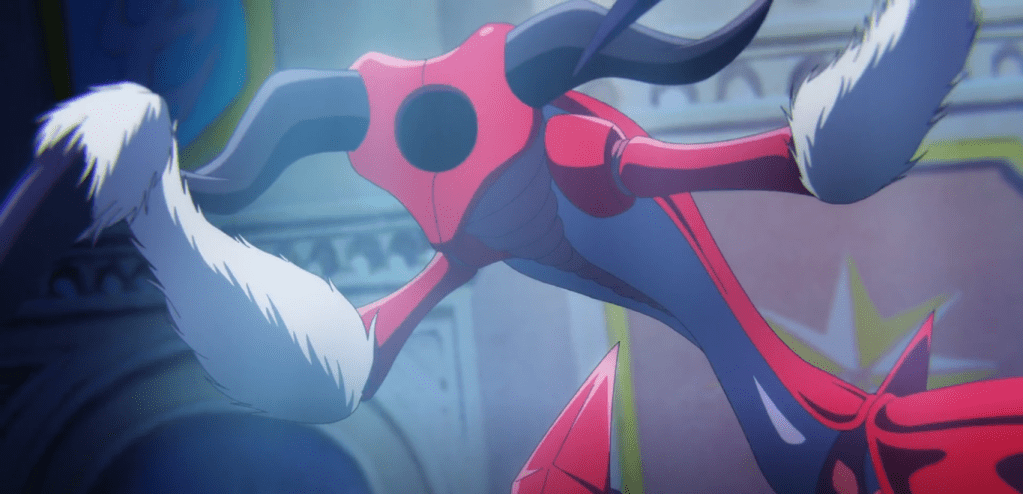
Zenhsu’s fantasy monsters, called Voids, are a particularly unusual iteration of the fantasy monster trope, namely because they serve as the main antagonists of the anime. Typically, monsters don’t play that role, their lacking personality making them unsuited for it, but Voids fill the main villain slot well in spite of that. Their cataclysmic power compared to most of the main cast confirms them as a threat in the audience’s eyes, and the characters’ fear of them only validates their threat further. They exist as powerhouses that grant the show a real conflict, but they’re tools for the narrative as opposed to cast members, affording Zenshu plenty of runtime to flesh out its world and characters.
Zenshu is far from the only show that uses genre tropes cleverly, but it is a great showing of how to do so. Mindless innovation is not what makes trope usage effective, it’s about tweaking narrative norms in beneficial ways for a specific story. Zenshu is able to have strong action, fun comedy, and an engaging character focus because of its trope use, and it couldn’t have done that without the creators being very intentional in their writing choices. If you’re a creator, take after this anime. Carefully way the pros and cons of genre tropes, and use them in ways that strengthen your work.
 Entertainment Analytical