
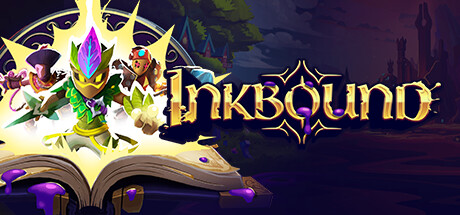
*Keep in mind everything said in this article is referring to Inkbound’s solo play experience, as I haven’t had enough exposure to its multiplayer to analyze it*
Difficulty (in the context of video games) refers to how difficult it is to complete tasks the game sets for the player or tasks the player is supposed to complete. Crafting difficulty is a challenge every game developer faces, but it’s something that most don’t perfect or even become necessarily good at. While a so-so approach to a title’s difficulty doesn’t ruin it, any game suffering from that issue certainly takes a massive hit to its overall quality. The reason for that lies in the emotions of gaming—the “feel” of a game. Implementing difficulty poorly makes players feel like quitting for the day; it makes them frustrated as opposed to engaged, which can damage a game greatly. On the flip side, implementing difficulty well creates player engagement and gives titles that “one more try” feel. The feel of a game is a big determinant of its lifespan, quality, and reputation, all of which play a huge role in the success or failure of a title. Thus, difficulty is extremely important to any game, as it largely creates the feel. So, how do you implement difficulty well? To do that, you have to craft it organically. That may seem like a vague response, but examining titles that do just that can help one understand how to craft organic difficulty. One such title is a gem rising in popularity by the day; that gem is Shiny Shoe’s Inkbound.
Difficulty Through Choice
Choice is usually something used to increase diversity in a video game, whether that be through widening the ways a game can be played or the ways its narrative can play out. For example, many fighting games allow for a choice of who the player wants to play as out of a large cast of unique characters, which allows those titles to appeal more to a larger audience by supporting multiple playstyles. That’s usually the merit behind utilizing choice in a video game; it diversifies the game somehow. It typically isn’t used for anything outside of that, making Inkbound incredibly bold to build a lot of its difficulty around choice. Through doing so, however, it carves out a one-of-a-kind feel to it that keeps its players coming back.
To start with, it’s important to note that Inkbound features two separate categories of choices: character-building choices and encounter choices. These two categories are intertwined with each other in all aspects of gameplay, effectively forcing the player to make a big decision at almost all times. The constant decision-making these two categories create makes the game intensely engaging to play and makes the title’s difficulty subtle yet palpable.
Character-Building Choices
Character-building choices are where a slight majority of the player’s decisions will be made. This category of choice in Inkbound includes picking a class, adding damage or traits to Bindings (essentially the player’s various moves, a la Pokemon) through choosing Augmentations, changing the base effects of a Binding through choosing Ascensions, utilizing a Font of Wisdom to either increase stats or heal oneself, picking Vestiges (essentially items that grant a special effect or stat bonus) out of a vault, etc. Character-building choices are extremely important in the title, as they determine how the player will play the game and the strategies they’ll have to use to succeed. A Magma Miner with critical hit-boosting Vestiges is going to play a lot different than a Weaver with Vestiges that grant evasive and stealth effects, as both the difference in class and Vestige change the approach to gameplay in all situations. These choices certainly create lots of diversity, but they also create difficulty through something called the paradox of choice.
According to this article by The Decision Lab, “The paradox of choice stipulates that while we might believe that being presented with multiple options actually makes it easier to choose one that we are happy with, and thus increases consumer satisfaction, having an abundance of options actually requires more effort to make a decision and can leave us feeling unsatisfied with our choice.”, and this is something that describes Inkbound’s character-building choices almost to a tee. Since almost all character-building choices in Inkbound have the player choosing between three options, and with it quickly becoming established to them how important those choices are, they naturally want to choose their best option. The issue is that Inkbound isn’t a game with a set meta; all types of factors can determine the quality of an option, and thus there is almost never a clear best one. When a couple simple choices can make or break a run, even a choice between three Vestiges or Augmentations is a daunting prospect, as understanding how the player should build their character isn’t obvious. The feeling of making the wrong choice is something that constantly haunts players, but with only situational judgment and experience to go off of, that feeling is inevitable. Character-building choices are so vital, yet the correct option is never clear, and deciding which option to go with is more than just thought-provoking. They generate difficulty on a mental level through the inherent risk of choice, making Inkbound a uniquely challenging experience.
Encounter Choices
Before going into combat in Inkbound, the player gets to choose the combat encounter they’re about to involve themselves in. These encounter choices include choosing which Villain to fight, which book to go into, and which specific combat encounter a player would like to do. Choosing a Villian (the final boss of a run) to fight is the first thing a player does during a run. It is largely inconsequential to most of a run, though each of the three Villains available to be fought in any given run has a specific quest tied to them. Those quests can range from doing a certain amount of damage to spending a certain amount of currency, and if they’re completed, the player can choose between three powerful Vestiges to use for the rest of their run. The quests may not directly impact a run, but depending on the quest the player winds up with, they can impact their character-building choices. This creates a slight connection between Inkbound’s two choice categories early, a connection that is only deepened by the other encounter choices. Choosing which books to enter determines the cast of enemies the player will contend with until that book’s endpoint, as well as which mutations (essentially debuffs or hindrances to the player) they’ll have to deal with if they’re playing a ranked run. That adds light strategy to book choice, as considering which enemies will be the easiest to fight given the player character’s state adds a bit more thought to an otherwise simple act. That strategy element heightens in ranked runs with mutations, which will influence character-building choices and overall combat for an entire run. The book choice isn’t always the biggest deal, especially in a non-ranked run, but it adds another layer of depth to Inkbound. Finally, choosing specific combat encounters rivals character-building choices as the biggest decision in a run of Inkbound. That importance is due to the rewards specific combat encounters give. These rewards can range from Kwillings (a currency used to buy many things in a run and something used for rerolls on character-building options) to vaults that grant a choice of Vestiges. Because of those rewards, choosing specific encounters dictates how fast a character can be built and how strong that character will be, making the choice of specific encounters very strategic. Both character quality and character-building speed are vital to success in a run, as lacking either one will kill runs. Strategizing to choose specific encounter options that allow for speed and quality is key, but which option to pick in a given situation isn’t always clear. Just like character-building choices, the risks involved with making those big decisions create mental difficulty. Encounter choices as a whole are based around risk versus reward. The player is essentially choosing what fights to take, so the difficulty of Villains, books, and specific encounters is another factor. Strategizing when to take a big risk or take the safe route is not only the fun of Inkbound’s encounter choices but also the generator of those choices’ difficulty.
How They Make Organic Difficulty
Character-building choices and encounter choices are hard to make, and the magnitude of their impact makes them important and consequential. That circles back to the concept of organic difficulty, which these two choice categories generate in spades. Organic difficulty is simply a form of difficulty that feels natural. It’s creating difficulty through things that are difficult to perform or understand fully, like making choices, but also being sure to make those objects of difficulty things the player would and should rationally account for. The telltale sign of organic difficulty is when failure feels like the player’s fault, not like the game did something to make them fail. If a player fails because he was shot by an enemy that just spawned offscreen, that’s not organic, as the player wouldn’t account for something outside of their field of vision that wasn’t even there a couple seconds ago. However, if enemy spawn points are clearly communicated to the player, all enemies spawn at the same time, and the player fails because they disregarded one of those enemies, that is organic difficulty. The game gave them a fair challenge, and they failed. One of those scenarios is frustrating, but the other makes the player want to be better and learn from their mistakes. Inkbound’s many choices create that organic difficulty, as understanding the value of every available option is difficult but certainly something the player should be thinking about. If they fail, they can learn from the errors in their decision-making and be better. That feeling of wanting to get it right is constantly in the player’s head because of how Inkbound creates difficulty through choice, proving that those choices are a genius way to create organic difficulty.
Combat
Inkbound’s choices are a genius way to create organic difficulty, but the title’s selling point doesn’t lie in those choices. The game’s combat is its nucleus; everything else is built around it, and there’s a good reason for that. The combat of Inkbound has an incredible gameplay foundation predicated on pace, and through that concept, it carves out more organic difficulty for its title.
Pace
Combat in Inkbound can vary heavily in its speed. Some fights will go lightning fast, and others can end up taking what seems like an eternity. There are a number of reasons for that, but all those reasons circle back to the simple fact that Inkbound’s combat is centered around manipulating pace. That focus allows gameplay to feel dynamic through its ever-changing speeds, ensuring the player doesn’t become bored and allowing for diverse strategies throughout a fight. Describing the ways Inkbound crafts its pace-focused combat, as well as detailing the impact of that focus, is best done through a scenario, so let’s make one for the sake of analysis.
A Weaver is surrounded by six weak enemies and one bigger enemy. The weak enemies can be taken out rather easily, but the player would be forced to use an entire turn to do so because they currently lack universal Bindings. Focusing on the smaller threats would allow the big threat to slam the player for a chunk of health, something that would hinder their character-building speed or survivability for that run. On the flip side, focusing on the big enemy would wipe the biggest threat off the board, and while the smaller enemies will still do notable damage to the player, it isn’t as big of a hindrance to their run as the larger enemy’s damage output. So, the correct choice is to attack the bigger enemy, right? Well, no. The correct option is actually neither, as it’d be much more effective to take down three or four of the small enemies before moving out of the attack radius of the larger foe. That slows down the pace of the fight, allowing the player to more methodically take down the enemies on the field without taking a high amount of damage that hinders survivability for the rest of the run. Doing the two most obvious options puts the fight at a faster pace, where mistakes in positioning or attack order could result in a catastrophic survivability decrease for a run.
What’s important to note in that scenario isn’t that the slower pace the correct option creates is optimal. It certainly is, but more so because the player is dictating the pace of play in the situation instead of the enemies dictating it like they would in the two most obvious options. That really illustrates what Inkbound’s combat feels like, as fights are really battles for control over the speed of play. If the enemies are determining how fast a fight is going, the player can have their health whittled down to dangerous lows while barely gaining any advantage at a slow pace, or quickly have their health chunked away at a higher pace. Either way, losing control of a fight’s speed leaves the player at a huge disadvantage. If players do have that control, however, then they can create those same disadvantages for enemies, thus giving them a colossal advantage in the process. Strategizing to maintain a desired pace or regain control of pace once it’s lost is the true joy of Inkbound’s combat. It makes the game feel dynamic and deeply interesting to play, a combination that makes for a wonderful gameplay experience.
How a Pace-Focus Creates Organic Difficulty
To put it bluntly, pace-focus crafts organic difficulty because it’s nearly the definition of organic difficulty in action. It’s difficult to understand what pace a fight is at or if one has lost control of that pace, but it is undoubtedly something players think about. When playing Inkbound, a player is bound to notice when they feel overwhelmed and a battle is moving too fast, or when they feel like they’re slowly taking damage while dishing back little in return. It’s very subtle, but every player will subconsciously think about pace, and their actions will constantly account for it. Making the pace more dynamic adds another layer of hardship to Inkbound’s gameplay, but with that increased difficulty comes a more organic way to challenge players. The manner in which the game uses its pace-focused gameplay to that end is remarkable and makes Inkbound a must-play.
Whether it’s difficulty through choice or through pace, Inkbound does an expert job of making its difficulty organic. Every failure is a lesson, and if one takes the time to learn those lessons, they can absolutely see improvement and cultivate mastery in their play of Inkbound. What Shiny Shoe has done with this game is remarkable; it’s incredibly satisfying and rewarding to play, and the reason for that comes down to how organic its difficulty is. Inkbound is an absolute gem of a game, and with qualities this great so early into its lifespan, the sky’s the limit for this masterful title.
 Entertainment Analytical
One response to “Inkbound and Organic Difficulty”
[…] the best choices. As brought out in The Decision Lab’s article The Paradox of Choice (and our Inkbound Article), operating with so many options generates some difficulty in the decision-making process, since […]
LikeLike