
*This Article Contains Minor Spoilers For The Film Cloverfield*
The medium of film is capable of emulating reality to a degree that can’t be matched in other forms of entertainment. Neither graphic novels nor video games have simulated reality with all the nuance that films have, with motion pictures like Oppenheimer exemplifying that. Taking advantage of that unique ability is what has made plenty of movies great, even if they just achieve realism in a singular aspect like acting or cinematography. Those that are realistic in many aspects, however, can immerse viewers like no other. The 2008 found footage film Cloverfield is perhaps the purest example of that sentiment. It’s a masterclass in portraying realism in film, and by examining its methods, it becomes clear why that is.
Acting
To start with, Cloverfield contains some of the most genuine, authentic acting in all of film. Every member of the cast masterfully portrays the characters, granting them clear emotions and personalities. This not only makes them relatable but also adds believability to their actions, helping to keep the audience immersed in the movie.

Lizzy Caplan’s performance as Marlena is just one example of the Cloverfield cast’s stellar acting, but she does as much of a standout job as anyone. The character’s shy, quiet, yet at times kind personality shines through all the noise of the film due to Caplan’s work; those realistic traits make her interesting and engaging to watch on screen. After clearly establishing those qualities, the actor expertly frames Marlena’s emotions through how someone with that personality type would express their feelings. She doesn’t give much away; her body language explains her mood most of the time, and she only vocalizes any distress when it pertains to others. Her performance contains all the subtle brilliance to make deciphering that form of expression possible, leaving the audience informed about Marlena’s disposition and thus easily able to connect with her character.
All the core characters of Cloverfield are brought to life with the same genius acting that makes Marlena succeed narratively. Mike Vogel’s performance as the sarcastic but courageous Jason and T.J. Miller’s work as the nice but nosy Hud—these roles are played with the same focus on personality and emotion. Because of that, the film is full of relatable, realistic characters that engage viewers through authenticity. Their actions make sense and move the plot, while the figures themselves are never boring. The cast’s ability to simulate reality to the degree they do is striking, with their efforts granting Cloverfield some superb characters that never fail to immerse viewers.
Cinematography
Nailing cinematography is especially difficult in a shaky found footage film like Cloverfield, but cinematographer Michael Bonvillian makes the act look elementary in said movie. The use of lighting, camera angles, and shot composition are nothing short of excellent, affording the motion picture a grounded, realistic feel throughout its entire runtime.
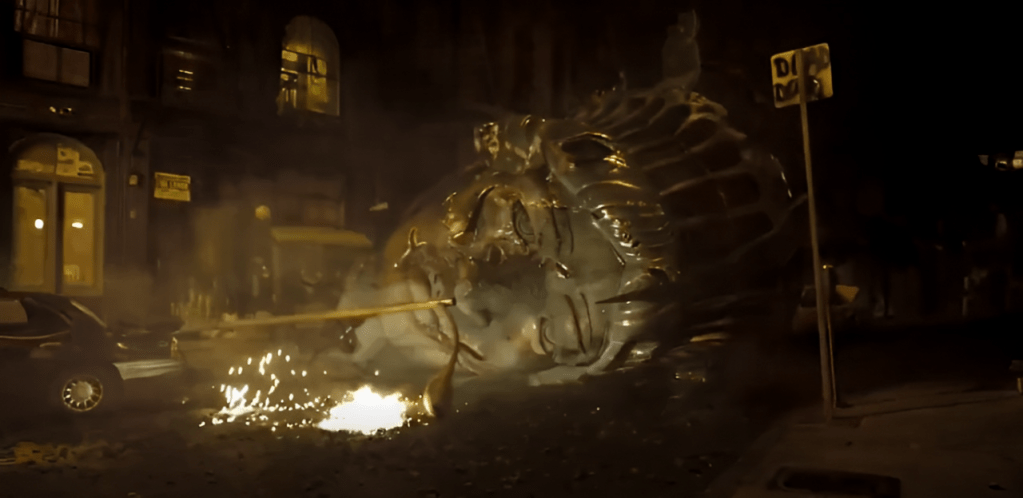
The initial destruction of Manhattan is the inciting incident of the movie, functioning as well as it does because of the cinematography behind it. The dimly lit street subconsciously unsettles viewers; the scale of all the shots used in the moment portrays the characters as vulnerable; and the rapid camera movements make the scene feel frantic and unsafe. Highlighting debris with the shot composition completes the metaphorical puzzle, wordlessly explaining the severity of the situation through that element of cinematography. All together, these elements make Manhattan’s destruction incredibly lifelike, leaving consumers feeling as if they’re witnessing footage of a true natural disaster.
The sheer magnitude of the event, the damage, the low amount of light—it’s all so realistic, but this masterful cinematograph isn’t exclusive to this one scene in Cloverfield. The walk through the subway uses darkness and a small, enclosed space to create feelings of claustrophobia and paranoia; the raid of the electronic store focuses on the crowd to convey mass fear and insecurity, etc. These scenes all possess such realistic emotional undertones due to the concept’s usage in the film. Cinematography is a pivotal part of Cloverfield’s powerful realism, that unique aspect of film allowing the movie to grab and keep a viewer’s attention and interest from beginning to end.
CGI
Making CGI (computer-generated imagery) look realistic may seem counterintuitive, as the purpose of it is to insert larger-than-life effects and creatures into films, but Cloverfield begs to differ. Its CGI confidently emphasizes realism, never sacrificing the logical look of something for an eye-catching visual, thus allowing a wow factor to exist in the movie without harming immersion.
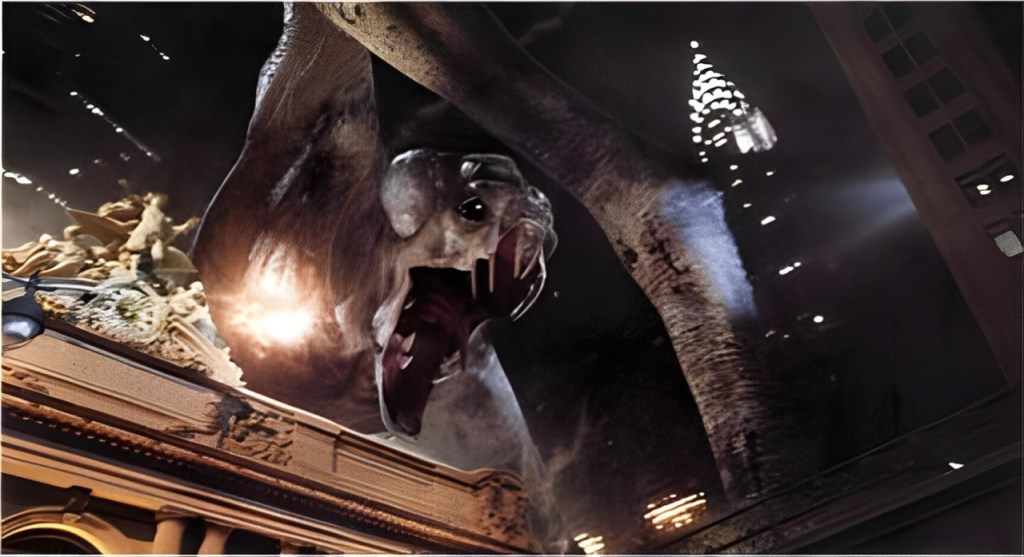
The monster Clover isn’t just a great example of Cloverfield’s realistic CGI; it’s an instance of masterfully designed CGI, regardless of the qualities it focuses on. The slimy, grotesque look of it has all the imperfections necessary to seem authentic while still having the grand stature to awe viewers. Moreover, those two traits combine to form an extremely intimidating entity, perfectly suited to fulfill its antagonistic role in the film. It’s a marriage that results in a thoroughly engaging bit of CGI, but Clover isn’t the only such bit that yields that benefit. Other instances of CGI in Cloverfield, such as the military attack scene or the aforementioned destruction of Manhattan, create the same effect. The realism all these more showy scenes portray ensures audience engrossment, all while entertaining them with visuals.
The many minds behind Cloverfield sewed realism into all the most unique aspects of film. Its acting, cinematography, and CGI all contain an authentic, genuine edge to them within the movie, engaging audiences to a degree seldom achieved before or since. Truly, the film is a masterful portrayal of realism in film, its success explaining the value in that, and its every frame expounding how to mimic its genius.
 Entertainment Analytical
2 responses to “Cloverfield: Realism In Film”
You should do a playthrough of the og xcom on a time accurate pc.
LikeLike
[…] to incorporate larger-than-life or generally fictitious elements into movies, as is noted in our Cloverfield article. Because of that, there is nothing virtually created imagery is better at than granting films with […]
LikeLike